
Businesses & investors
Understand markets, assess competitors and evaluate investments with evidence built for commercial decisions.
Explore business researchBusiness intelligence and investment research for confident decisions in Africa. We help investors, companies and institutions understand markets, evaluate opportunities and act on evidence.
 Evidence for Enterprise. Intelligence for Investment.
Local market intelligence, financial analysis and development economics, brought together around your decision.
Understand markets, assess competitors and evaluate investments with evidence built for commercial decisions.
Explore business researchDesign policies, evaluate programmes and understand the economic and social effects of investment.
Explore development researchCombine local knowledge, field research and economic expertise for demanding assignments in Africa.
Partner with IDEREstablished in Ghana in 2017, IDER is an independent Africa-focused business-intelligence, investment-research and economic advisory firm. We connect market realities with rigorous analysis and practical recommendations.

Business and investment research leads our strategic orientation. Development economics adds insight into affordability, institutions, livelihoods and sustainable growth.
Established in Ghana
Operational base
Market focus
80% Business & investment
20% Economic & development
Customers, demand, competition and routes to growth.
Explore the practiceFeasibility, due diligence, project economics and financial analytics.
Explore the practiceBusiness performance, growth options and decision dashboards.
Explore the practicePolicy, programme effectiveness, welfare and inclusive development.
Explore the practiceFind the research approach that connects your question to a practical next step.
From first market assessment to investment appraisal, performance monitoring and programme evaluation.
How large is the reachable opportunity, and which segments are most attractive?
Output: Market opportunity report with transparent sizing assumptions
Approach: Triangulation of official statistics, industry sources and primary market evidence
Decision: Decide whether to enter, where to compete and how to reach customers.
Plan this studyIs the project commercially and financially viable under realistic assumptions?
Output: Feasibility report covering commercial, financial and economic considerations
Approach: Demand validation using primary research and relevant secondary evidence
Decision: Decide whether to proceed, redesign, phase or defer an investment.
Plan this studyDoes independent market evidence support the investment thesis and growth forecast?
Output: Commercial due-diligence report organised around the investment thesis
Approach: Independent review and triangulation of company, market and industry information
Decision: Decide whether the commercial evidence supports continued investment consideration and what further conditions or investigations are needed.
Plan this studyWhich operating and financing assumptions drive performance and cash requirements?
Output: Editable financial or economic model with clearly identified assumptions
Approach: Driver-based modelling of revenue, expenditure, working capital and capital investment
Decision: Compare investment and funding options, understand liquidity pressures and identify the assumptions that deserve closer attention.
Plan this studyWhich customer needs and segments should guide our product or service?
Output: Customer insight report with segment needs and behavioural findings
Approach: Structured consumer or business-customer surveys with defined sampling plans
Decision: Choose the customers to prioritise and the changes most likely to improve product relevance or service experience.
Plan this studyWhich growth choices offer the strongest fit with our market and capabilities?
Output: Business performance diagnostic with evidenced causes and priorities
Approach: Market, competitor and business-model analysis against strategic objectives
Decision: Set a clearer strategic direction, focus resources and establish how progress will be assessed.
Plan this studyWhich indicators best explain performance and support the decisions we face?
Output: Analytical report explaining findings, drivers and practical implications
Approach: Data profiling, definition review and assessment of coverage, missingness and consistency
Decision: See what is changing, which segments or drivers matter and where further investigation is needed.
Plan this studyWhat difference did the intervention make relative to a credible comparison?
Output: Evaluation design and analytical plan with feasibility and evidence requirements
Approach: Assessment of intervention logic, implementation conditions and counterfactual options
Decision: Judge whether evidence supports continuation, adaptation, scaling or further testing of an intervention.
Plan this studyUnderstand customers, adoption and the economics of financial access.
Research questionsConnect demand, supply chains and project economics.
Research questionsTest demand, project assumptions and implementation conditions.
Research questionsUnderstand location, affordability and absorption.
Research questionsMap journeys, freight demand and route economics.
Research questionsEvaluate market demand alongside economic and community effects.
Research questionsSector pages distinguish documented experience from research applications. Specialist expertise and country delivery are confirmed for each assignment.
Understand the barriers affecting women’s access to and use of digital public services in Ghana.
The evidence informed discussion of practical barriers to digital inclusion and public-service access. No causal impact on service uptake or client commercial performance is claimed.
Review evidence and scopeAssess how the CocoaSoils programme was implemented and identify lessons for sustainable cocoa-production research and delivery.
The assignment provided an evidence base for programme learning and delivery decisions. Observational comparisons and preliminary findings are not represented as definitive causal impact estimates.
Review evidence and scopeHistoric records, not current news. Summaries state disclosure limits; photographs are illustrative. Client endorsements are published only with permission.
Field research and evaluation assignments informing public-service and development decisions.

Household registration · Ghana · 2020
Explore the assignment
Inclusive digital public services · Ghana · 2023
Explore the assignment
Smallholder farmer targeting · Ghana · 2023
Explore the assignment
CocoaSoils process evaluation · Final report, March 2024
Explore the assignmentLogos identify the organisations associated with these assignments. They do not signify a current affiliation with IDER.
Nine editorial series connect sourced economic and social evidence to business, investment and policy questions.
A practical control framework for investment teams and researchers assessing digital access to securities records.
Published: 2026-09-28 · Reference: September 2026 platform announcements; no measured adoption or investment outcome
Read the brief →Convert a strong national growth forecast into contract-level questions about payment timing, concentration and working capital.
Published: 2026-09-28 · Reference: AfDB release 23 September 2026; outlook for 2026–2027; illustrative contract stress test
Read the brief →How development teams and market researchers can distinguish a statistical revision from a real change in household welfare.
Published: 2026-09-28 · Reference: World Bank September 2026 vintage; global 2024 estimates compared with March 2026 vintage
Read the brief →IDER’s final report for the Ghana National Household Registry describes local-team recruitment and training, tablet-based interviews and data-quality review across six districts in Ghana’s North East Region. It records 92,022 households enumerated.
IDER GNHR Final Report, 27 October 2020, PDF pages 5–6, 9–14 and 19. These are documented assignment outputs, not a client testimonial.
Review the method and outputs →These hypothetical examples show how a research commission can support a decision. They are not client testimonials or completed assignments.
A manufacturer needs to choose between a nationwide launch and a focused regional entry.
Compare customer segments, distributor economics, competitor positioning and willingness to pay. Test demand assumptions against interviews and observed market conditions.
Use a phased entry plan with explicit volume, price and distribution thresholds before committing expansion capital.
Scope this research →A project sponsor needs to understand whether the proposed revenue and financing assumptions are defensible.
Link market evidence to capital expenditure, operating costs, working capital and debt service. Compare a base case with downside scenarios and implementation constraints.
Identify the conditions that support proceeding, redesigning or pausing the project and the evidence still required by financiers.
Scope this research →A programme team needs to distinguish implementation problems from gaps in programme design.
Combine delivery records, participant research and a suitable evaluation design. Examine who is reached, what changes are observed and which alternative explanations remain plausible.
Prioritise delivery improvements and define what can credibly be concluded about results, including the study’s limitations.
Scope this research →Define the decision, intended users and evidence gap.
Agree methods, sampling, indicators and analytical plan.
Combine credible existing sources with primary research.
Apply market, statistical, financial and economic methods.
Triangulate evidence and test assumptions and scenarios.
Explain findings, uncertainty and their implications.
Compare options and identify implementation priorities.
Present outputs and support agreed follow-up.
Independent research is most useful when it combines context, technical depth and clear implications for the client.
Formal and informal markets, customer behaviour, institutions and implementation realities.
Market research, finance, statistics, economics and policy in one analytical frame.
Options, financial implications, priorities and practical recommendations.
Research design, fieldwork, analysis, modelling, reporting and workshops.
Design review, piloting, validation, traceable sources and analytical review.
Relevant disciplines and country expertise, scoped around the assignment.
A market-entry decision needs more than a headline market size. Define the customer, the reachable opportunity and the conditions under which an entry strategy could work.
Read the guideA credible investment case connects market evidence, technical assumptions, financial performance and implementation risk. Forecasts should be tested, not simply presented.
Read the guideCommercial due diligence examines whether the market, customer base and business model support the investment thesis. Its value lies in independent challenge and clear implications.
Read the guideA dashboard is useful when its indicators tell management what to investigate or do. Start with the business decision and the operating model before choosing charts.
Read the guideMonitoring, performance evaluation and impact evaluation answer different questions. The appropriate approach depends on the programme, the decision and the evidence available.
Read the guidePractical commissioning guidance; these guides are not empirical market reports or client-study findings.
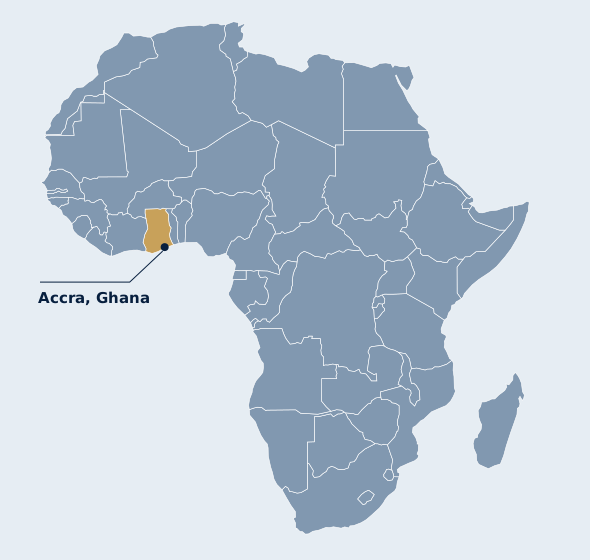
We coordinate research from Accra. West Africa is an immediate regional focus; country expertise, local partnerships and delivery arrangements are assessed for each assignment.
Ghana is IDER’s operational base. For assignments elsewhere in Africa, the proposal defines country expertise, local-language capability, research permissions, field access and quality-control responsibilities before delivery is agreed.
Understand our geographic capabilityMap: Natural Earth 1:110m boundaries. Gold: Ghana base. Other countries shown for context.
Measured visits and interactions across IDER’s public website in the last 24 hours.
Each ring presents a total and its composition. Shares use a separate denominator for each metric.
By last observed page · past 5 minutes
Share of 0 active sessions · no percentage denominator
Distinct sessions seen in the last five minutes, grouped by their last observed public page. Other includes active pages beyond the three shown or outside the period’s top-20 page table. This live window is independent of the selected reporting period.
Source: consented first-party IDER events. 28 Oct, 14:22:09 – 28 Oct, 14:27:09 UTC · All devices · All public pages
| Category | Count | Share (%) |
|---|
Shares are calculated from exact counts and rounded for display. The neutral ring is a visual guide, not a target or capacity scale.
By pages viewed per visit
Share of 0 recorded visits · no percentage denominator
Each distinct session in the filtered reporting period belongs to exactly one page-view-depth group. No page opening includes action-only sessions. Sessions are not unique people.
Source: consented first-party IDER events. 27 Oct, 14:27:09 – 28 Oct, 14:27:09 UTC · All devices · All public pages
| Category | Count | Share (%) |
|---|---|---|
| No page opening | 0 | — |
| 1 page view | 0 | — |
| 2–4 page views | 0 | — |
| 5+ page views | 0 | — |
Shares are calculated from exact counts and rounded for display. The neutral ring is a visual guide, not a target or capacity scale.
By viewport category
Share of 0 page views · no percentage denominator
Each filtered page-view event belongs to one viewport category: mobile below 768px; desktop/tablet at 768px or wider. Shares use page views, not overlapping device session counts.
Source: consented first-party IDER events. 27 Oct, 14:27:09 – 28 Oct, 14:27:09 UTC · All devices · All public pages
| Category | Count | Share (%) |
|---|---|---|
| Mobile viewport | 0 | — |
| Desktop / tablet | 0 | — |
Shares are calculated from exact counts and rounded for display. The neutral ring is a visual guide, not a target or capacity scale.
By activity group
Share of 0 action events · no percentage denominator
Research exploration includes download clicks, searches, searches with results and assignment views. Enquiries/forms includes form starts, submissions and contact clicks. Store activity includes report additions and checkout openings. These are additive event groups, not conversion rates or verified sales.
Source: consented first-party IDER events. 27 Oct, 14:27:09 – 28 Oct, 14:27:09 UTC · All devices · All public pages
| Category | Count | Share (%) |
|---|---|---|
| Research exploration | 0 | — |
| Enquiries & forms | 0 | — |
| Report-store activity | 0 | — |
Shares are calculated from exact counts and rounded for display. The neutral ring is a visual guide, not a target or capacity scale.
Consenting visits only. Browsing sessions are counted, rather than unique people.
Tell us the decision, the evidence gap and your timeframe.